Main
Prehistoric Sociolinguistics:
PreSoLi
With the initiative of Sampsa Holopainen (Helsinki University), Sampsa (PI), Minerva Piha (Nord University) and I started a Nordic network for early to mid career researchers in prehistoric sociolinguistics in January, 2026.
In PreSoLi network, we will investigate the sociolinguistic aspects of the prehistoric language contacts between Indo-European languages, Uralic languages, and Paleo-European languages in Northern Eurasia with active cooperation between linguistics, archaeology (and anthropology, as well, if possible!).
Our goal is to develop an interdisciplinary method for sociolinguistic analysis on language contact phenomena reconstructed for prehistoric times.
There is a long research history in language contacts especially between Indo-European and Uralic languages. However, the sociolinguistic analysis has not been done on the historical data. Surely it is challenging to apply sociolinguistic methods on prehistoric (reconstructed) datasets, because we do not know the exact social situations and (ancient) speakers' networks of the relevant language groups as there is no written data (that's why it's "prehistoric"....).
So, we will combine a typological approach of sociolinguistics (that does not require detailed information of individual speakers' networks) and evidence from other fields, such as archaeology, to supplement missing information.
My research interests in PreSoLi
I am very glad to be one of the founders of the network PreSoLi.
In the network activities, I am particularly interested in the language contacts between Baltic and Uralic branches, e.g., Saamic and Finnic. In addition to evidence from archaeology, I think evidence from archaeogenomics (for migration routes) and anthropological theory on reciprocity and commensality will be interesting to combine, too. As I attempted in my recent paper, I would like to understand the social situation where the borrowing of loanwords took place by trying to answer a question like what sort of social situation is reflected in the semantic fields of loanwords, or in the borrowing patterns.
- post on 2026-Aug.-15 -
The 1st PreSoLi Workshop in Helsinki at the University of Helsinki, 12th - 13th August, 2026.
We are very happy that the first workshop of our network took place on 12th and 13th August, 2026, and ended successfully.
The aim of the Workshop was to know people's interests within the field of prehistoricl sociolinguistcs: what they are working on and what they want to know through research in this field.
It was a lunch-to-lunch workshop with 10 talks given by 12 speakers, two of whom participated via Zoom. The workshop consisted of 3 sessions [program]:
- Session 1 "Case studies from Uralic and Indo-European": Methodological discussions on prehistoric sociolinguistics through case studies on Uralic-IE language contact
- Session 2 "Finnic": Prehistoric sociolinguistic topics in Finnic reconstructible through Finnic-Indo-European contacts.
- Session 3 "Saami": Language contacts between Saami and Indo-European languages: combining archaeological anad linguistic evidence.
In addition, there was one session for discussion in the end of each day, where participants shared their thoughts on the talks of the day and raise any questions that they did not have chance to ask during the regular sessions. We discussed how we can properly combine archaeological evidence and knowledge with loanwords in a given context (Uralic-Baltic contact in textile-weaving context, Saami-Germanic contact in iron-production context), the sociological contexts behind the Indo-European loanwords in Uralic in particular contexts (kinship terms, maritime vocabularies), some morphological patterns in loawords and stratification of them, among other exciting topics.
A point made on the reciprocity in the scholarly discourse was particularly impressive for me. Minerva, one of our coordinators, pointed out that there is asymmetry in the discussions on certain topics, i.e., Saami loanwords in Scandinavian are much less discussed than Scandinavian loanwords in Saami. There is asymmetry in the reciprocity of discussions on loanwords themselves, too. Certainly, if we really aim at being "scientific" and "objective", it will be necessary to be conscious of this issue as well.
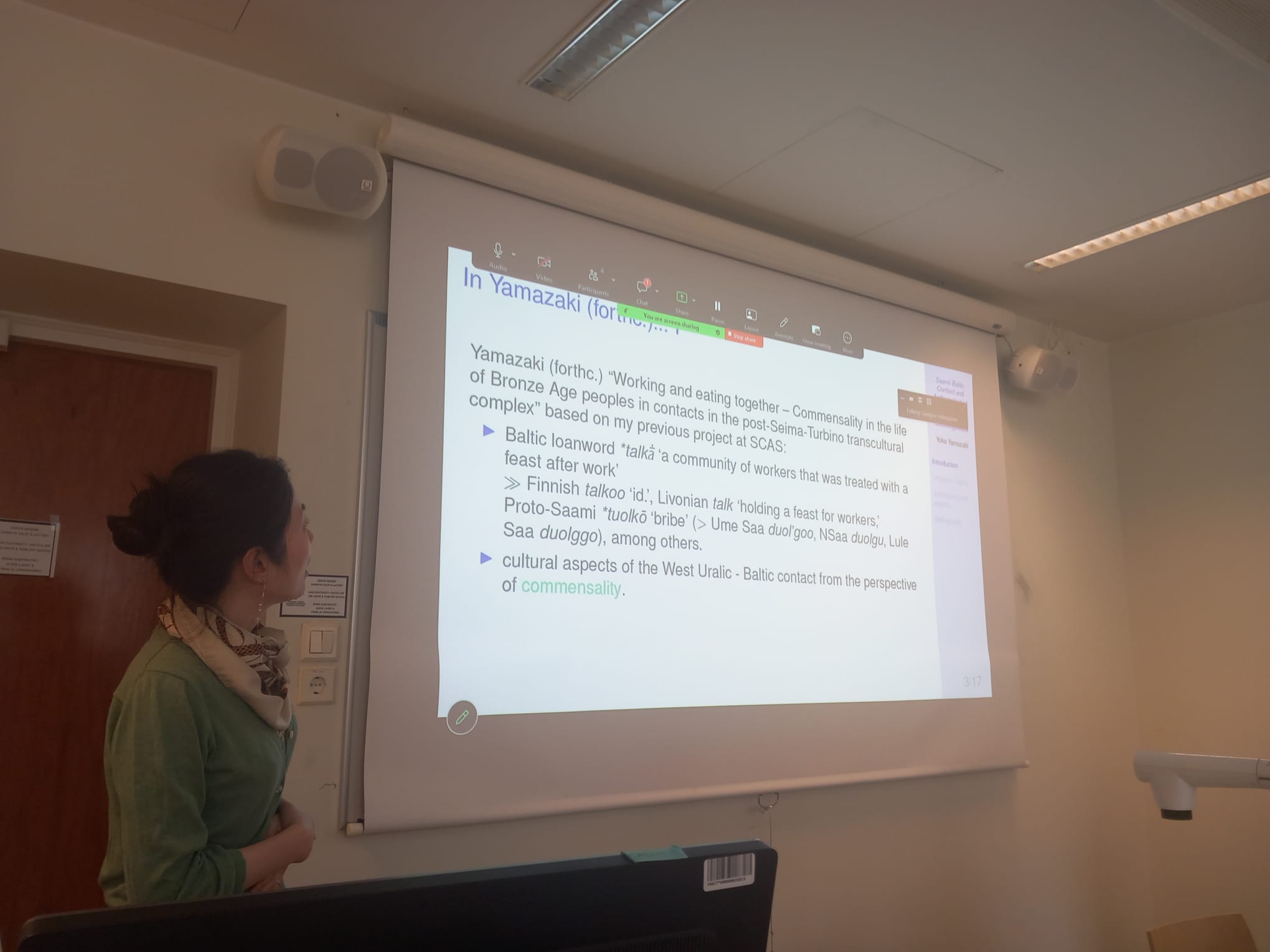
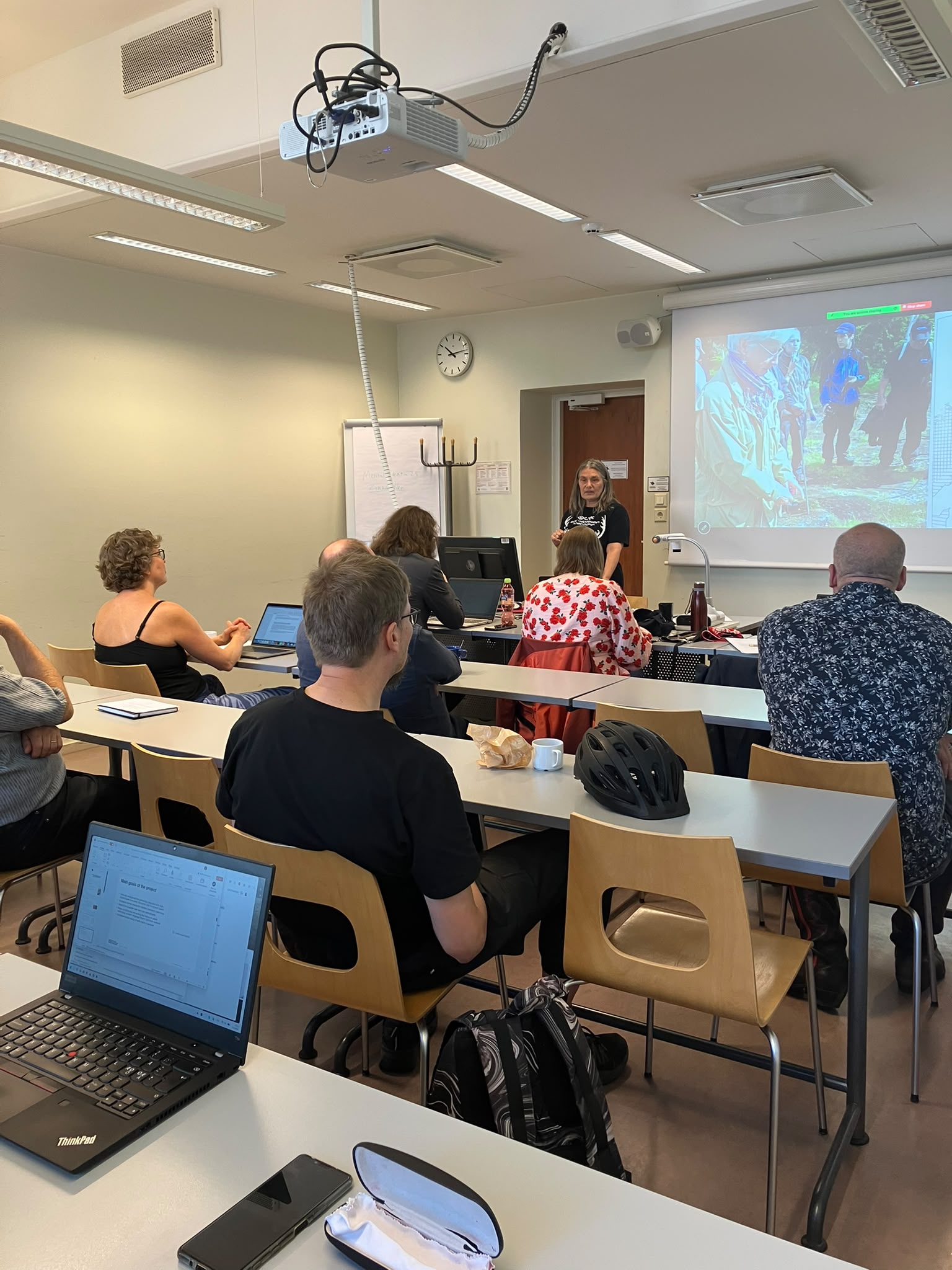
It was so interesting and exciting that we, coordinators, often forgot to take photos for documentation, and we have only several ones, which can be shared below.



- post on 2026-5-21 -
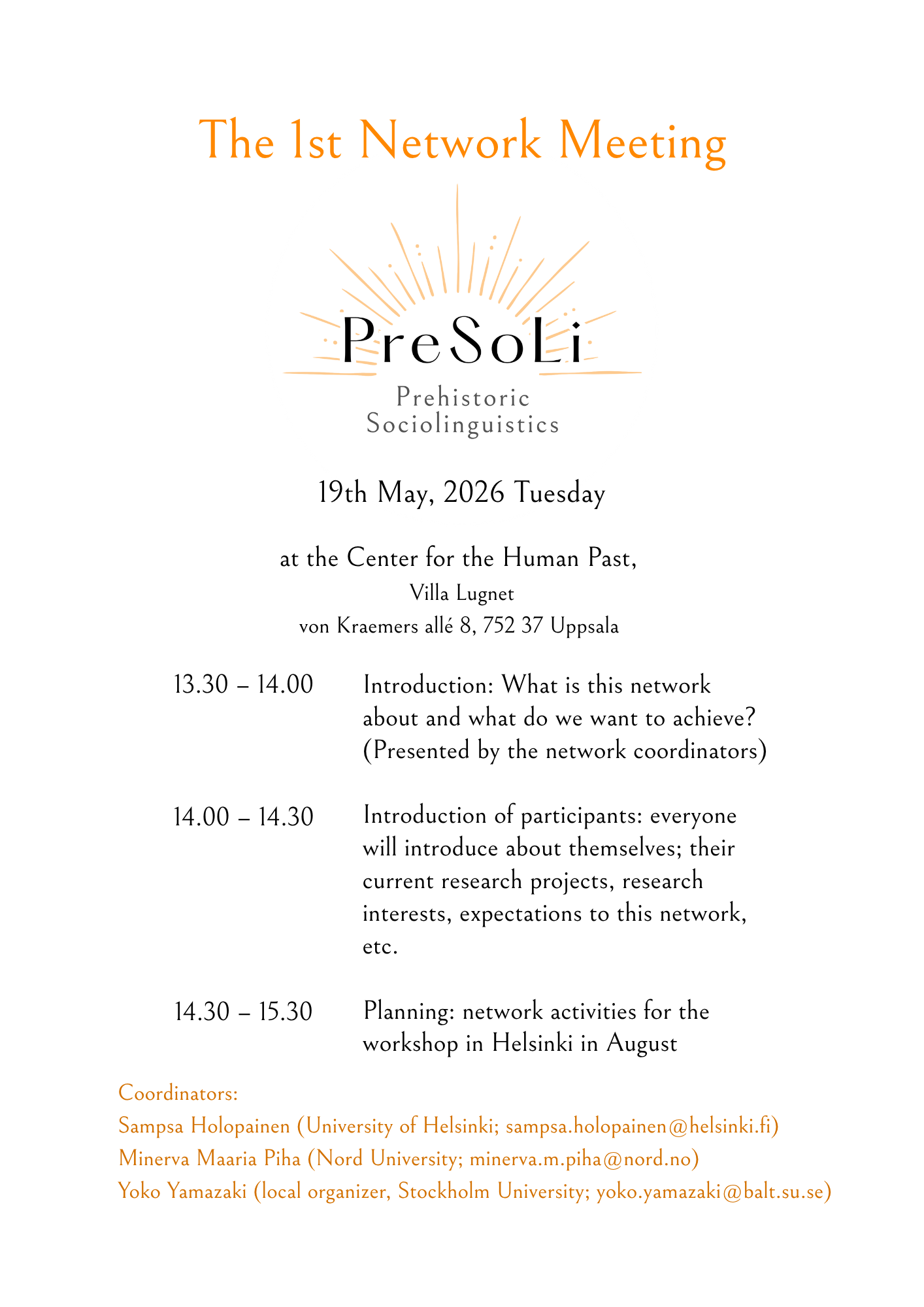
The 1st network meeting at the Center for the Human Past, Uppsala, 19th May, 2026.
Our 1st network meeting took place at the Center for the Human Past in Uppsala. We, coordinators of PreSoLi, presented the aims and the planned activities of our network to the people in Sweden who showed their interests in prehistoric sociolinguistics.
Just presenting ourselves and our research interests to each other was such a big fun! We were a group of historical linguists (Jenny, Anders, and me), Sampsa, Adam, and Anthony, our specialists in Indo-European = Uralic language contact both from the Indo-European and the Uralic sides, Minerva in Saami linguistics / archaeology, and Åsa in Saami religion and Indigeneous Methodologies.
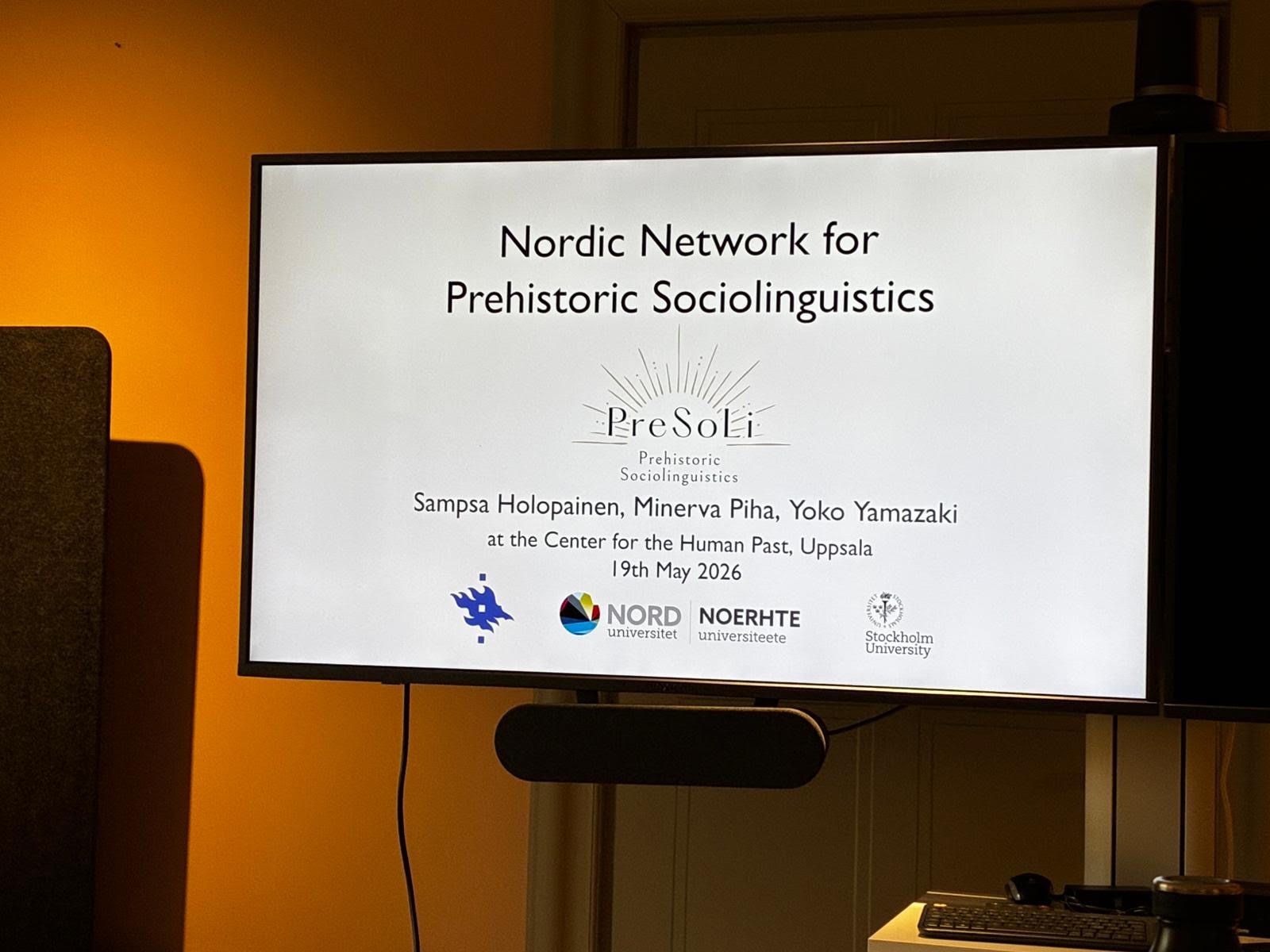
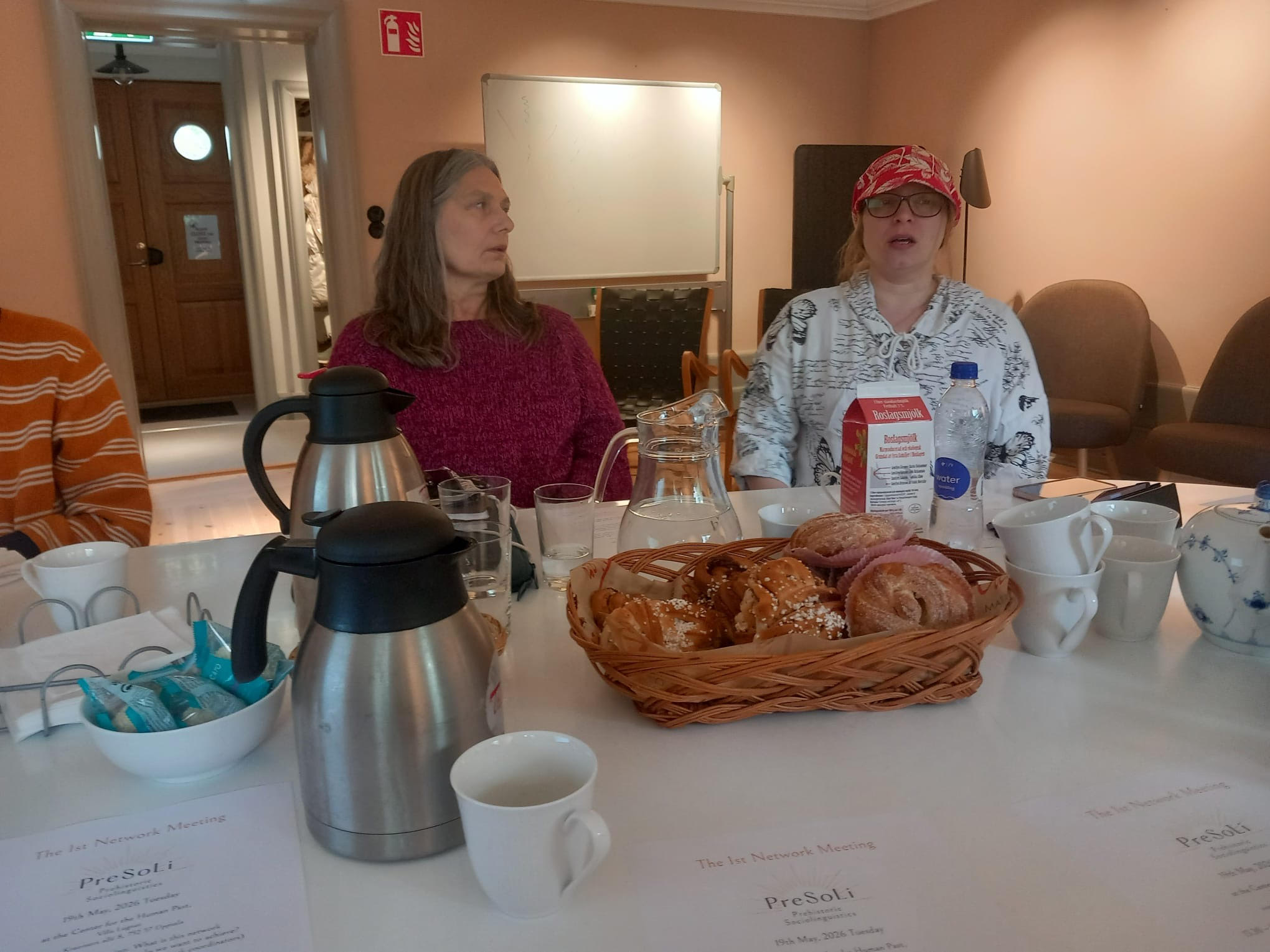
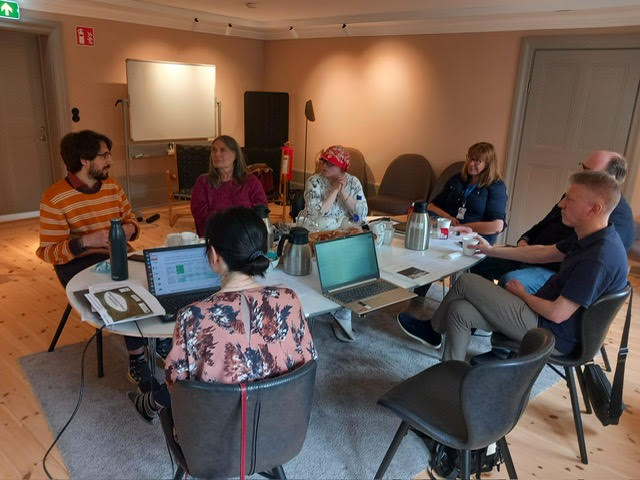
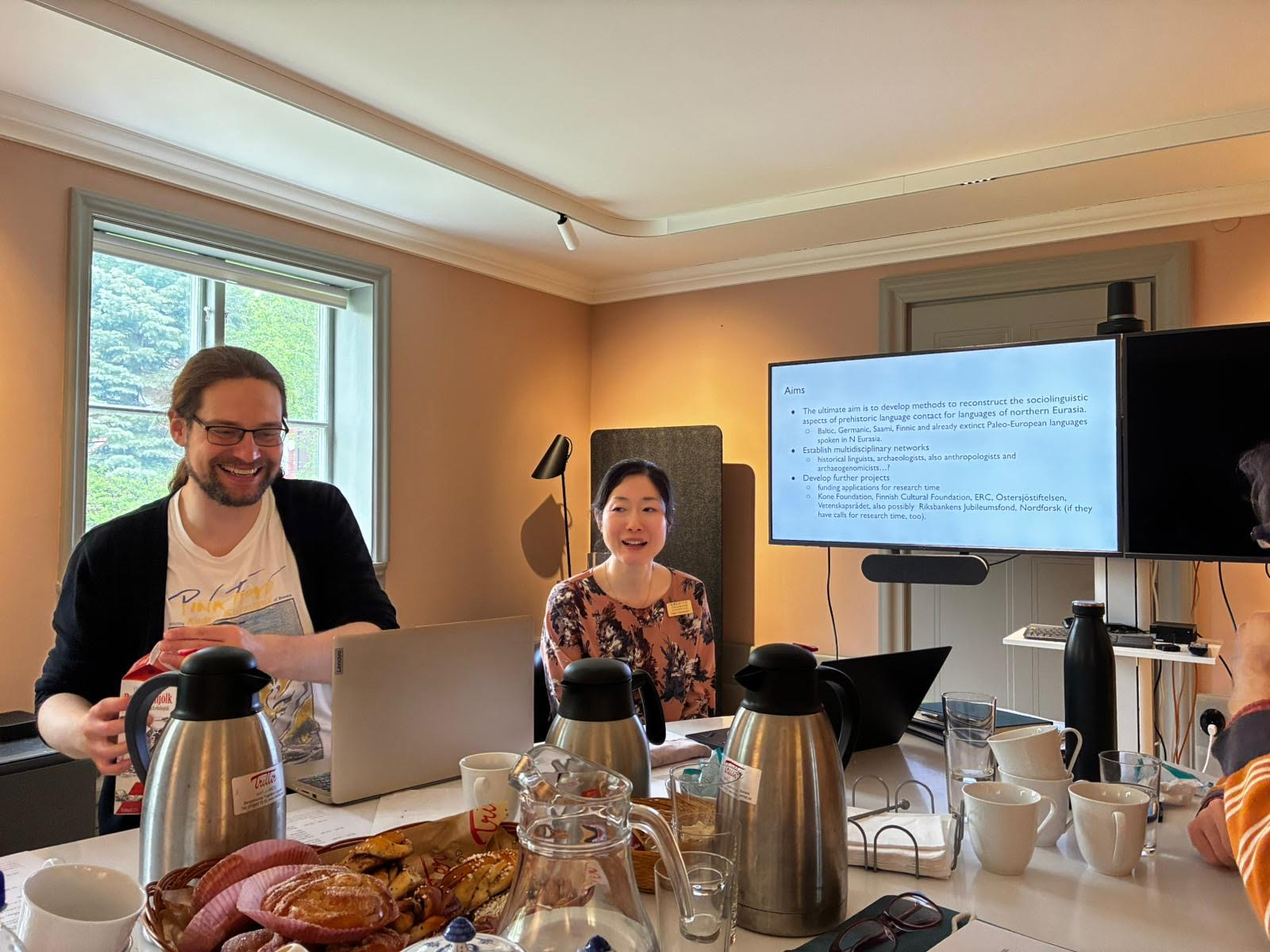
Following the meeting, our PI Sampsa Holopainen gave a lecture on "Indo-European contacts and the history of "West Uralic"."
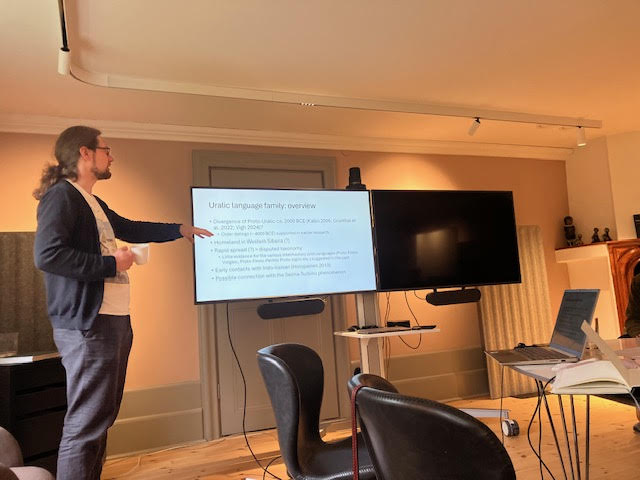
Many thanks to all those who were there on 19th, and who helped us make it happen!
- post on 2026-4-17 -
We received the first networking fund "Nordic Growth Funding" from University of Helsinki in March! With this grant, we are going to organize a meeting in Sweden, a workshop and one more meeting in Helsinki.
As a part of the PreSoLi activity, now we are planning a sequel project on the prehistoric contact phenomena betweeen Saami languages and various language groups, such as Germanic, Baltic, Finnic, and Paleo-European languages in Fennoscandia. We welcomed one more coordinator, Adam Hyllested, from Denmark for this project planning. The project will be called "Prehistoric Saami Sociolinguistics: PreSaSoLi" (a little confusing acronym...).
Copyright © 2012-2026 Yoko Yamazaki